






Formic acid evaporator
Price on request
SKU: 3536
Varroa tester
Leave your number and we will get back to you with the price and availability.
or call us: +995 577 10 24 40Directions for use:
Test 1 – infestation level
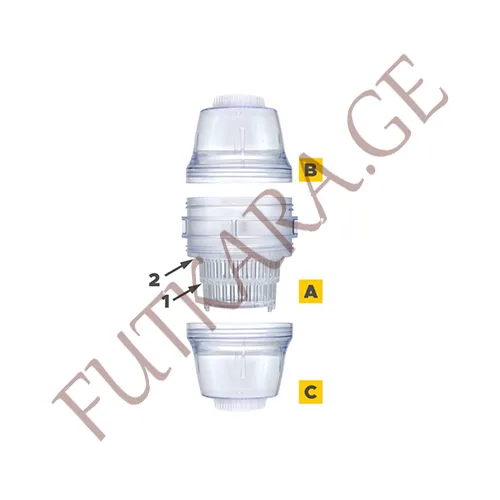
1. Collect about 300 bees and fill container A up to the second level.
2. Close container A with cover B.
3. Put a teaspoon of powdered sugar into container C.
4. Attach container C to the bottom side of container A and for 1–2 minutes
shake so that the powdered sugar completely covers the bees.
5. Make sure most of the powdered sugar ends up at the bottom of container C, then remove container C.
6. Add water to dissolve the sugar. Count the mites floating in the water.
7. Up to 3 mites – low infestation, 3–10 mites – moderate. More than 10 mites – heavy infestation.
8. Release the bees.
Test II – mite resistance to treatments
1. Fill container A with about 150 bees collected
from brood frames (from the same hive as in Test 1) – they should reach level 1 of the container.
2. Close the container with lid B. Attach a treatment strip to container A with thread in the lower slot of the H-shaped holder. Wear gloves!
3. Place the tester in a dark place at room temperature. The treatment strip must be at the top! Wait six hours.
4. Remove the strips. Shake the container several times and tip the contents onto white paper.
5. If the number of dead mites exceeds 1% of the number of test bees, there is no resistance to the treatment, i.e. the treatment is effective.
Test III – hygienic behavior of bees
1. Remove 1 frame with 10–15-day-old capped brood from the hive
2. Pierce the brood cells with the pins located on container A or C,
(push them in well 2–3 times to damage the brood
tissue)
3. Return the frame to the hive. If more than 60% of the cells are cleaned after 6 hours,
more than 90% after eight hours and 100% after one day, the colony
has good hygienic behavior.
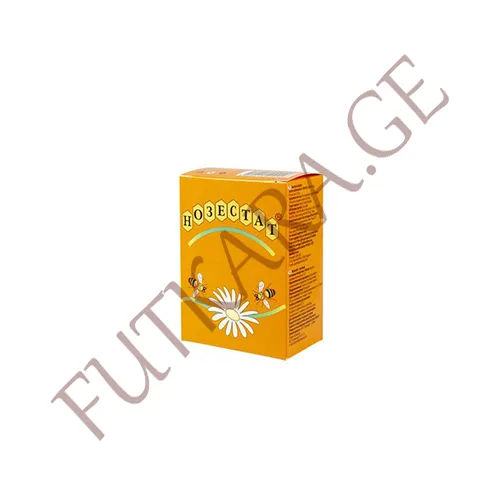
Nozestat Solution is a combination of iodine and formic acid. The two active substances have a strong antiseptic and antiprotozoal effect and show additive synergism.
Your cart is empty.
Back to shop